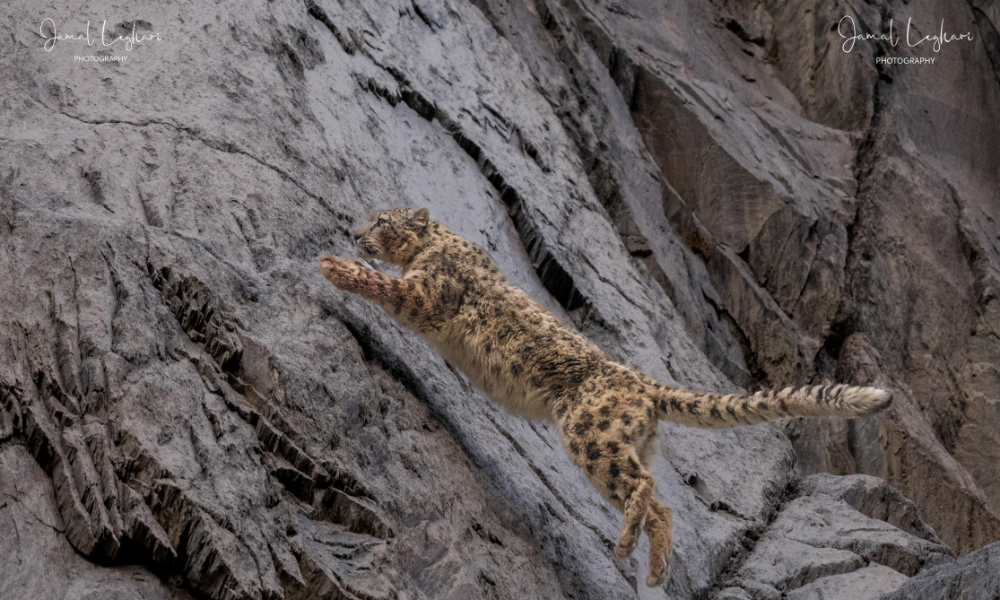
By September, the high mountains of Pakistan begin to turn. The days are shorter, temperatures start to fall and the landscape slowly prepares for winter. For the snow leopard, this is more than a change in weather. It is a change in the conditions of survival.
Far above the villages of Gilgit-Baltistan, Khyber Pakhtunkhwa and Azad Jammu and Kashmir, the snow leopard moves through a landscape where every season brings a different challenge. Its survival depends not only on finding prey, but also on the health of the mountains around it.
That is why September deserves attention.
The snow leopard is an elusive animal. It lives at low densities across vast and difficult terrain, making direct observation almost impossible. Conservationists therefore rely on evidence collected from the landscape—camera traps, signs, prey surveys, genetic samples and information from communities.
READ MORE: Snow Leopard Spring Movement and Survival in Harsh Mountains
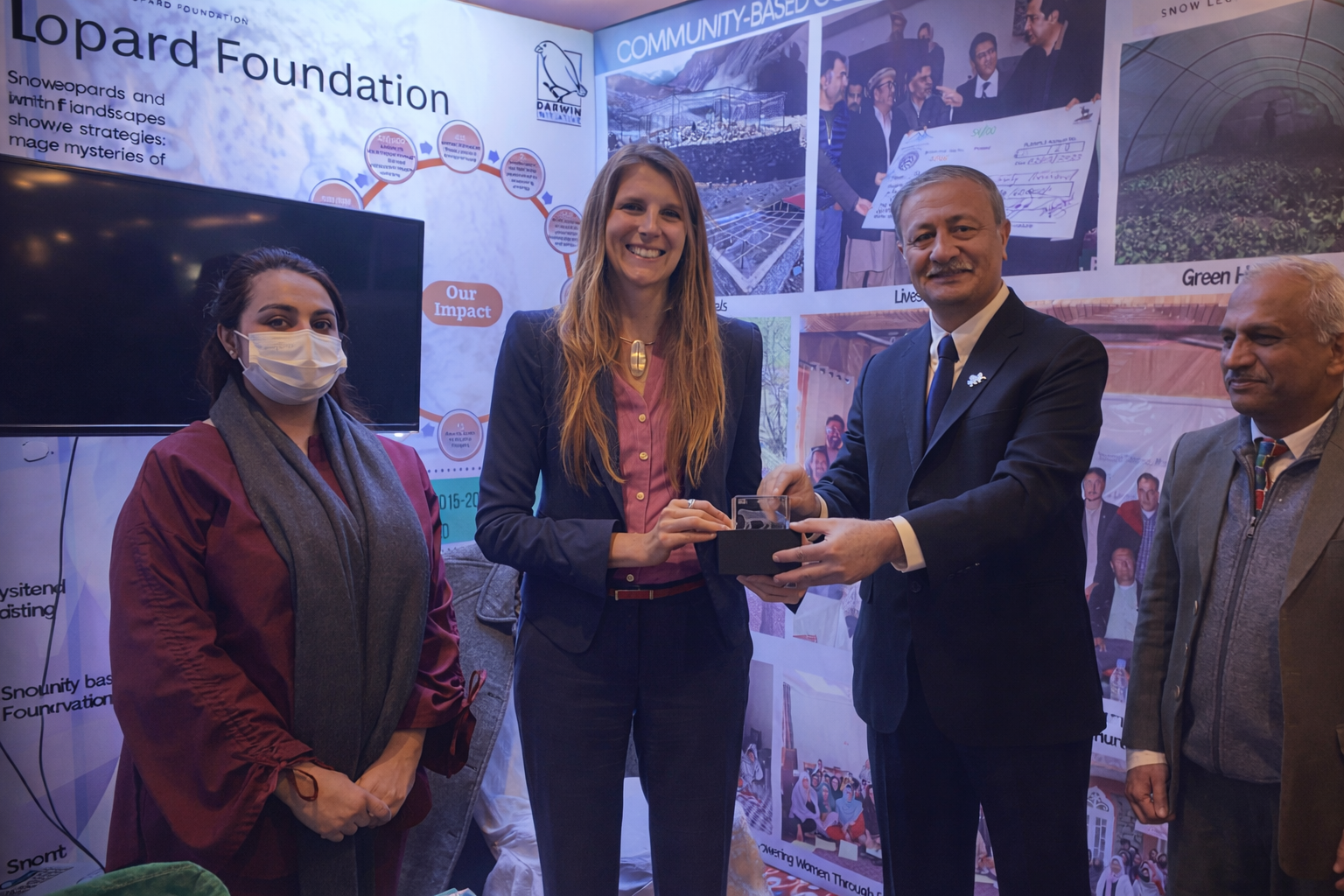
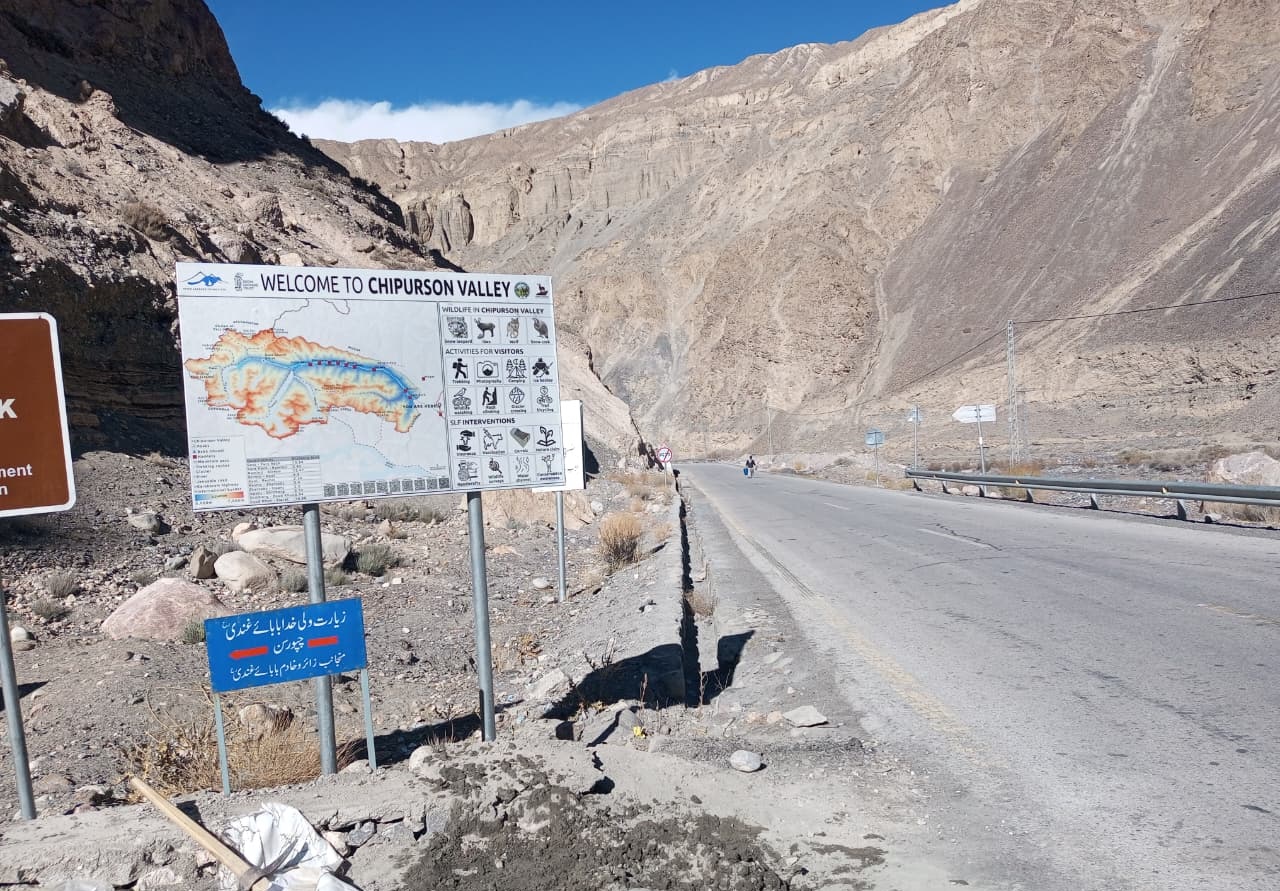
The Snow Leopard Foundation (SLF) has built its conservation work around this evidence. Its monitoring programmes examine snow leopards, other carnivores, wild ungulates and their habitats. The Foundation’s work now includes thousands of kilometres of camera-trap coverage, eDNA analysis and ungulate surveys across snow leopard landscapes.
The snow leopard is only one part of the story
A snow leopard cannot survive without its prey.
Markhor, ibex, blue sheep, urial, musk deer and other wild ungulates form an important part of the mountain food web. SLF describes these species as the main prey of the snow leopard and has been monitoring ungulate populations to understand the condition of the prey base.
This creates a simple but important lesson: counting snow leopards alone is not enough.
If prey numbers decline, the pressure on predators can increase. If habitats deteriorate, both wildlife and people can suffer. And when natural prey becomes harder to find, encounters between carnivores and livestock can become more likely.
This is where conservation becomes complicated.
When a predator meets a livelihood
For families living in remote mountain valleys, livestock is not just property. It can be a major source of income, food and security.
A snow leopard killing livestock can therefore turn a conservation problem into a household crisis.
SLF’s response has increasingly focused on reducing that conflict rather than treating wildlife protection and community welfare as separate issues. Predator-proof corrals, livestock insurance, vaccination programmes and community engagement are designed to reduce losses while making it easier for people to live alongside carnivores. SLF reports that its programmes have established predator-proof corrals, supported community-based livestock insurance and vaccinated large numbers of livestock across its programme areas.
The principle is straightforward: if conservation does not work for people, it will struggle to work for wildlife.
What the cameras are telling us
Much of the snow leopard’s life happens beyond human sight.
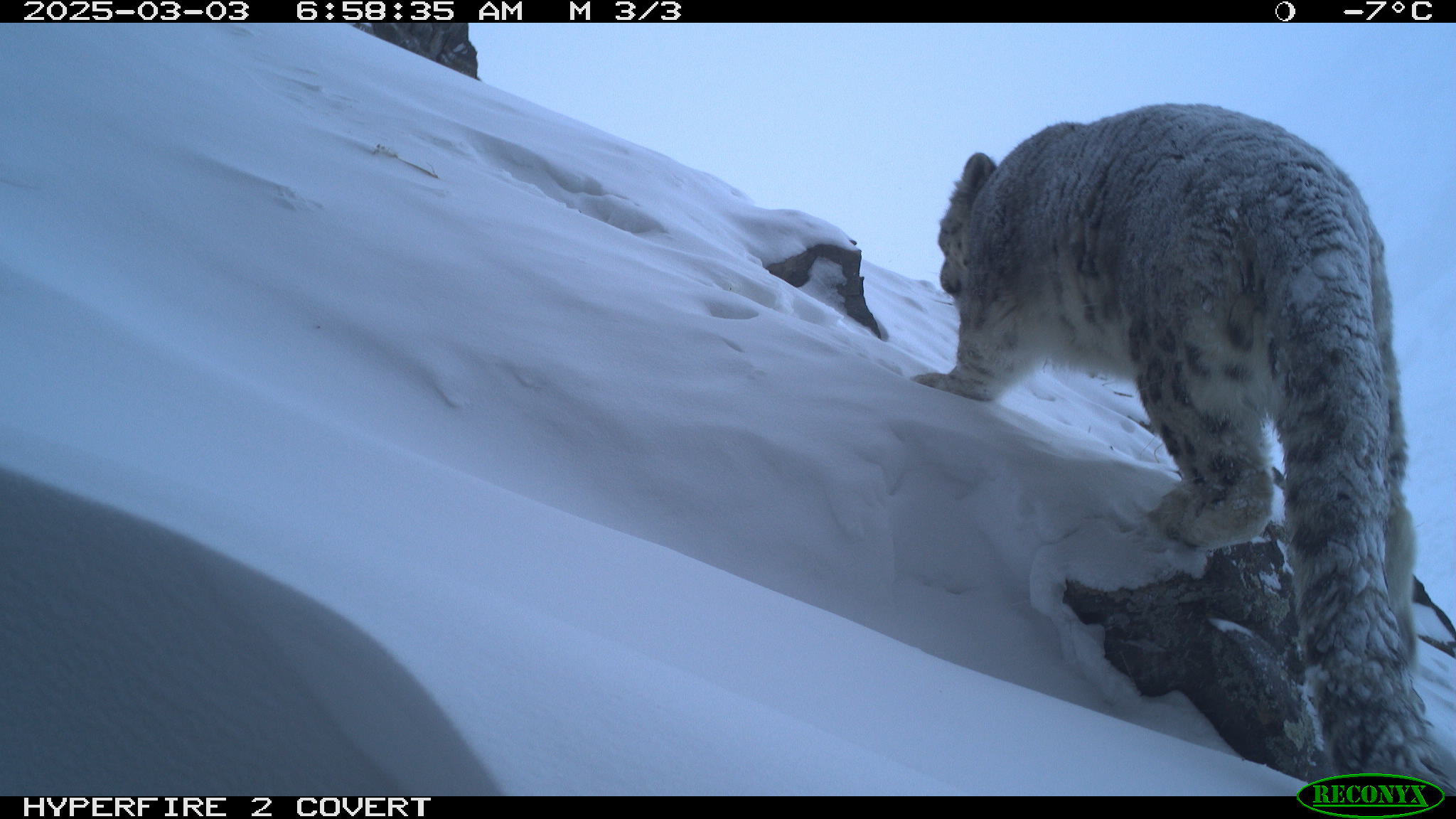
A camera trap can therefore become the closest thing conservationists have to a window into its world. Images collected over months can help researchers understand where animals move, which habitats they use and how wildlife responds to changes in the landscape.
SLF has used camera trapping as part of its long-term effort to understand snow leopard ecology. Its current impact figures report camera-trap coverage across tens of thousands of square kilometres.
But a photograph is only the beginning.
The real value comes from turning thousands of images and field observations into evidence that can guide decisions.
That evidence can tell conservationists where protection is most needed, where prey populations require attention and where communities may face greater risks from human–wildlife conflict.
September is a reminder, not a deadline
There is no single month in which a snow leopard is either safe or threatened.
Conservation is a year-round effort.
Yet September offers a useful moment to look at the whole system before winter arrives: the predator, its prey, the habitat and the people who depend on the same mountains.
The question is not simply “How many snow leopards are there?”
The harder questions are:
Is there enough prey?
Is the habitat healthy?
Are communities benefiting from conservation?
Are livestock losses being reduced?
And are we collecting enough evidence to know whether our interventions are working?
Those questions matter far beyond September.
The next step belongs to all of us
The future of Pakistan’s snow leopards will not be decided by conservation organisations alone. It will depend on governments, researchers, communities, rangers, young people, donors and ordinary citizens who choose to care about what happens in the mountains.
A sighting can provide valuable information. A community can protect a habitat. A farmer can adopt safer livestock practices. A student can learn and speak about wildlife. A supporter can help fund conservation work.
You can be part of that effort.
Learn about snow leopard conservation. Share reliable information. Support community-based conservation. If you encounter a snow leopard or other important wildlife, report the sighting through the Snow Leopard Foundation’s reporting system rather than approaching or disturbing the animal.
Because when the mountains change, wildlife feels it first.
And when we protect the mountains, we protect much more than the snow leopard.
 By: Faheem akhtar