Engage · Educate · Conserve
Snow Leopard Foundation
A science-based conservation organization dedicated to conserving viable populations of snow leopards and other wild carnivores across Pakistan. Through innovative research, community-led conservation, capacity building, and educational outreach, SLF works to create harmony between people and wildlife while safeguarding fragile mountain ecosystems.
Each element of our approach is a thread in the rich mosaic of conserving these magnificent animals and their habitats.
🏔️
Vision
Inspire Pakistan to become a land where people live in harmony with wildlife, where nature is valued and conserved, and where ecosystems continue to sustain life and livelihoods for future generations.
🎯
Mission
Conserve snow leopards and other wild carnivores through cutting-edge research, community partnerships, conservation education, and sustainable landscape management across Pakistan.
Our Goals
What We Aim to Achieve
✅ Enhance tolerance and build support for conserving snow leopards and carnivores in Pakistan.
✅ Promote scientifically grounded habitat, population, and natural resource management.
✅ Position the snow leopard as a flagship for mountain ecosystem conservation.
✅ Address conservation knowledge gaps through evidence-based research.
✅ Increase awareness about snow leopard ecology, threats, and conservation needs.
✅ Support government institutions in improving protected area management and conservation policies.
✅ Foster an enabling environment for ecological research in Pakistan.
What We Stand For
Core Values
🌿
Nature and People Thrive Together
We believe human wellbeing and healthy ecosystems are interconnected, and that conservation should support both biodiversity and sustainable livelihoods.
🔬
Science Guides Our Actions
We promote evidence-based conservation through rigorous research, monitoring, innovation, and informed decision-making.
🤝
Communities Are Conservation Partners
We respect and value local communities as essential partners in protecting wildlife, landscapes, and natural resources.
🐆
Wildlife Deserves a Future
We are committed to securing the long-term survival of snow leopards, their prey, and other wildlife through effective conservation action.
⚖️
Integrity Builds Trust
We uphold honesty, accountability, transparency, and professionalism in all our work and relationships.
🌐
Collaboration Creates Impact
We believe meaningful conservation outcomes are achieved through strong partnerships among communities, government, academia, and conservation organizations.
🌱
Future Generations Matter
We work to conserve ecosystems and natural heritage so that future generations can benefit from and value nature.
Registration
Legal Status
The Snow Leopard Foundation is a non-profit organization registered under Section 42 of the Companies Act, 2017 with the Securities and Exchange Commission of Pakistan (SECP). Also approved under Section 2(36) of the Income Tax Ordinance, 2001.
SLF holds Pakistan Centre for Philanthropy (PCP) accreditation — a mark of organizational credibility, financial transparency, and governance excellence — awarded in 2016, 2020, 2023, and 2026.
Since 2008
Achievements & Impact
40,000+
Households Engaged
50
Valleys Covered
30,075
km² Program Area
400K
Livestock Vaccinated / yr
Since 2008, SLF has played a pioneering role in advancing snow leopard conservation in Pakistan through science-based research, policy advocacy, community engagement, and conservation action. Working closely with local communities, wildlife departments, federal institutions, and academic partners, SLF has transformed conservation efforts into a landscape-scale, evidence-driven program spanning the Himalaya, Karakoram, and Hindukush mountain ranges. Through livestock insurance, predator-proof corrals, conservation education, and sustainable livelihood initiatives — including conservation tourism, alternative energy, apiculture, and water management — SLF actively reduces human-wildlife conflict while strengthening local resilience.
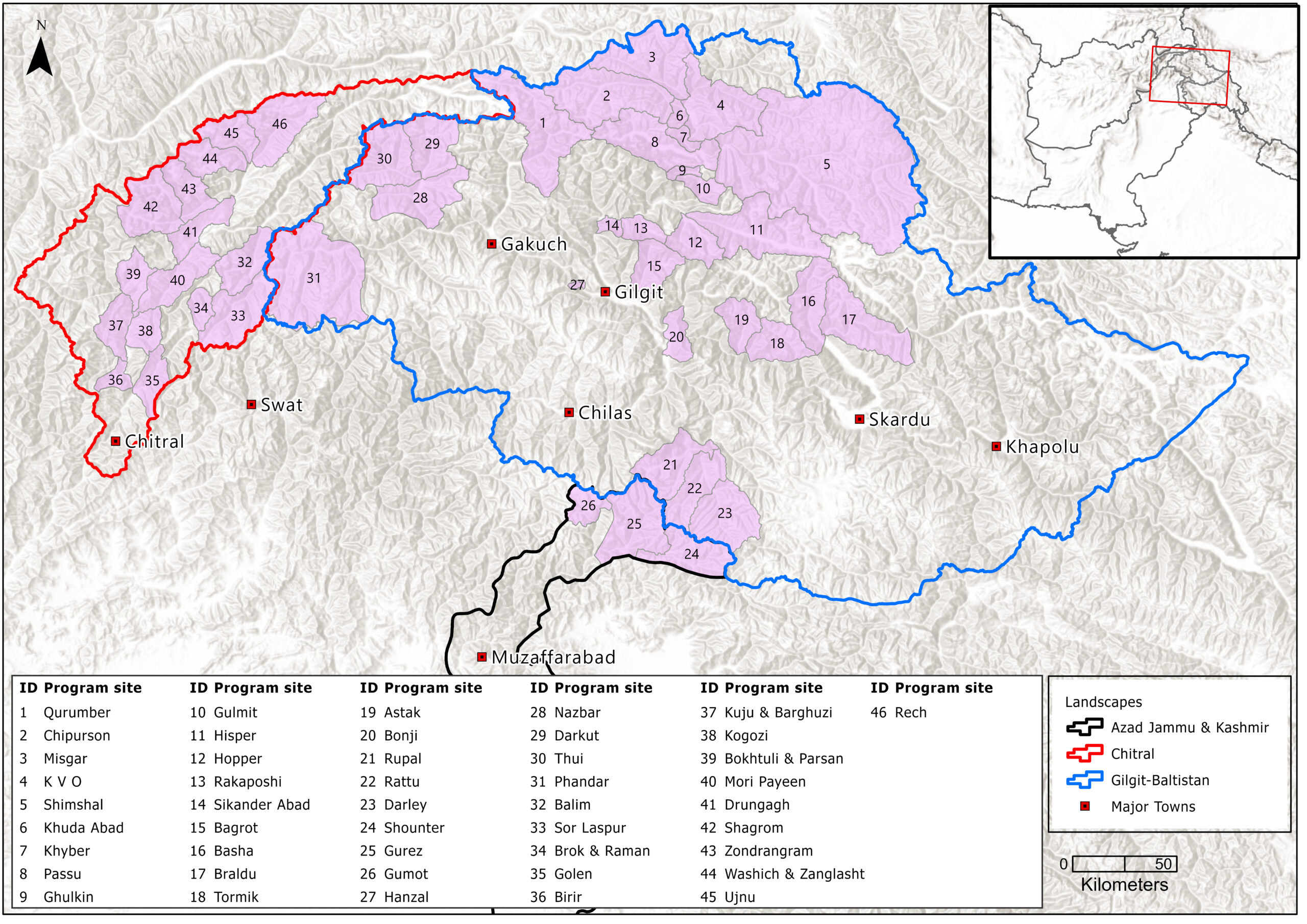
Program sites across the Himalaya, Karakoram, and Hindukush mountain ranges